PRODUCT MODEL
Double Band Pipe Repair Clamp
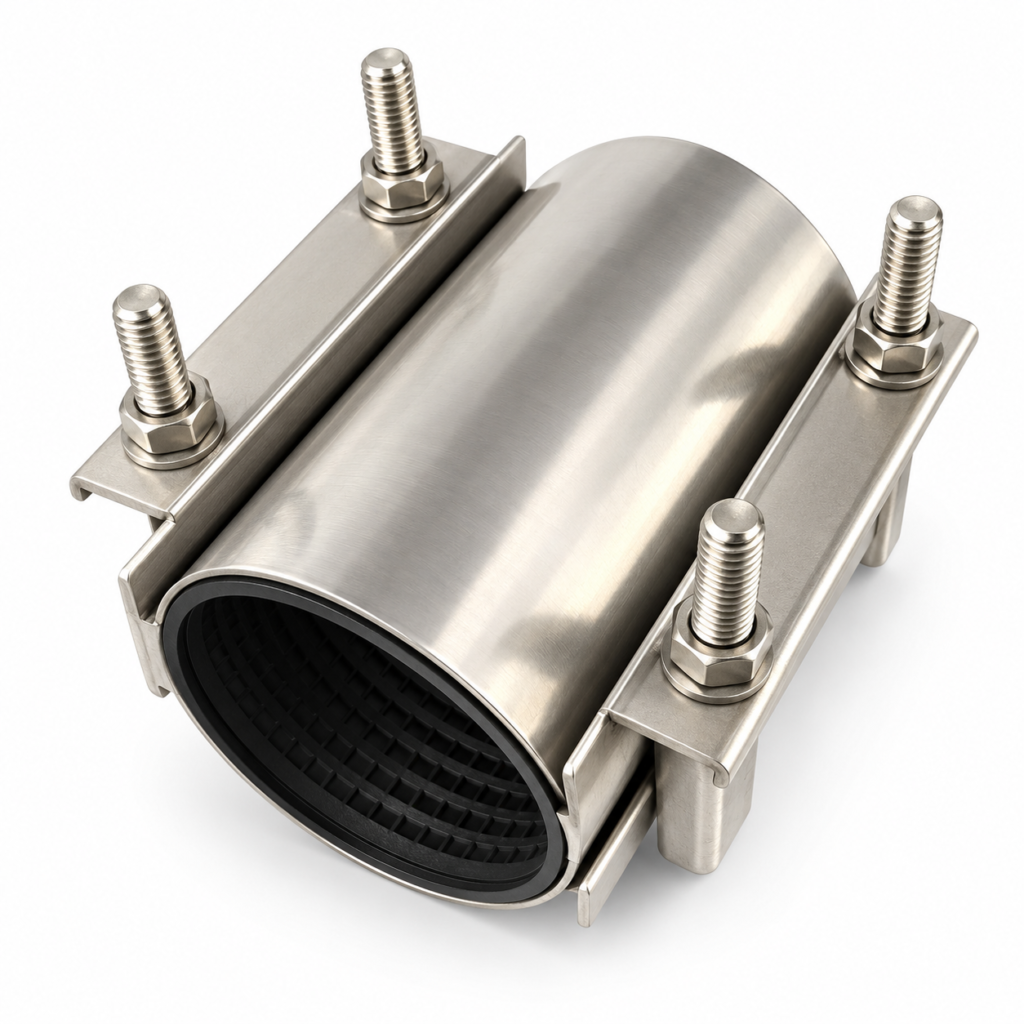
The LEEVOA PIPE Double Band Pipe Repair Clamp is a stainless steel wraparound clamp designed to seal localized leaks, pinholes and selected cracks on existing pipelines. This LEEVOA configuration uses one continuous stainless steel shell, an internal rubber sealing gasket and bolted fastening assemblies on two opposite sides of the clamp.
Both the single band and double band models use a one-piece shell. The main difference in these LEEVOA configurations is the fastening layout: the single band model has a bolted fastening assembly on one side, while the double band model has fastening assemblies on both sides. The correct choice depends on the pipe outside diameter (OD), defect, installation access and approved service conditions—not the product name alone.
How Does a Double Band Pipe Repair Clamp Work?
The stainless steel shell wraps around the damaged pipe, and the rubber gasket sits between the shell and the pipe surface. Tightening the fasteners on the two sides compresses the gasket against the pipe to seal a suitable localized defect. The gasket must extend beyond the damaged area onto sound pipe surface.
Double band does not mean two separate stainless steel shell halves in this product design. It describes the two-sided fastening arrangement. Other manufacturers may use the term differently, so drawings and actual product photographs should be checked before comparing quotations.
A repair clamp is designed to provide a seal under approved conditions. It is not automatically an axial restraint device or a substitute for replacing a pipe that has lost structural integrity.
Key Features
- One-piece stainless steel shell: a formed wraparound body rather than two independent shell sections.
- Dual-side bolted fastening: fastening assemblies positioned on opposite sides of the clamp, with the exact bolt and lug configuration determined by the selected model.
- Full-circumference gasket contact: the rubber gasket is compressed against the pipe exterior to seal an appropriately sized damaged area.
- Material options: AISI 304 or 316 stainless steel and EPDM or NBR gasket compounds may be specified where available for the confirmed model and service.
- Mechanical installation: the clamp fastens around an existing pipe without welding, subject to the model’s installation instructions.
- Application-based selection: pipe OD, clamp length, pressure, fluid and condition of the pipe govern suitability.
Technical Specifications and Selection Guide
The table below describes the construction and the information needed to select this double band repair clamp. It is not a fixed size chart or pressure certification. Final dimensions, fastener details and working limits must be checked against the approved supplier drawing for the exact model.
| Item | Specification / Selection Requirement |
|---|---|
| Product type | Double band stainless steel pipe repair clamp; wraparound mechanical sealing design |
| Shell construction | One-piece formed stainless steel shell; not a two-section shell assembly |
| Fastening arrangement | Bolted fastening assemblies on two opposite sides; bolt count and layout depend on the confirmed model |
| Shell material | Stainless steel; AISI 304 or 316 options subject to model confirmation |
| Sealing gasket | EPDM or NBR where available; select according to fluid, temperature and applicable approval requirements |
| Bolts and lugs | Materials, corrosion protection and tightening torque to be confirmed from the manufacturer’s drawing and instructions |
| Pipe outside diameter | Choose a model whose stated OD working range includes the measured pipe OD |
| Clamp length | Select sufficient axial coverage to extend beyond the defect onto sound sealing surfaces |
| Applicable pipe materials | Steel, cast iron and ductile iron; PVC, GRP and PE/HDPE only when the exact clamp design is approved for that pipe |
| Working pressure | Model-, diameter- and application-dependent; confirm the stated rating for the proposed repair |
| Service temperature | Depends on the gasket compound, medium and approved clamp configuration |
| Installation method | Wraparound mechanical fastening; tighten both sides in the manufacturer’s specified sequence and to the specified torque |
| Typical use | Localized leak repair in compatible water, wastewater and selected industrial piping systems |
Important: DN or NPS alone is not sufficient for clamp selection. Pipes with the same nominal size can have different actual outside diameters. Please provide the measured OD in millimeters, along with the damage dimensions.
Where Double Band Pipe Repair Clamps Are Used
- Water distribution: selected pinholes, short cracks or other localized defects on suitable water pipelines.
- Wastewater networks: repairs where the metal components and gasket have been checked for the environment and medium.
- Industrial piping: compatible utility and process lines within the confirmed pressure and temperature limits.
- Planned maintenance: localized repairs where a clamp is an approved alternative to a more extensive pipe intervention.
The selected clamp must fit the pipe and leave enough sound surface for the gasket to seal. Extensive wall loss, pipe separation, large deformation or an unstable crack may require another engineered repair method. For broader guidance, see Emergency Pipe Repair and our Pipe Repair Clamp range.
Single Band vs Double Band: What Is the Difference?
For the models described here, both clamps have a one-piece stainless steel wraparound shell. The single band configuration fastens on one side; the double band configuration fastens on two opposite sides. That changes the closure arrangement and the access needed during installation. It does not automatically make a double band clamp stronger, suitable for a larger pipe or approved for higher pressure.
Compare the actual OD range, clamp length, gasket, rated pressure and installation requirements of the exact models. See the Single Band Pipe Repair Clamp or read our single band vs double band selection guide for additional context.
How to Select the Correct Double Band Clamp
- Measure the actual pipe OD. Check the diameter at the repair location and report noticeable ovality or surface irregularities.
- Record the damage. Provide the type, length, width and position of the leak or crack, plus photographs when available.
- Check the pipe condition. Identify the material, coating, corrosion and remaining sound sealing area. Structural defects may need engineering review.
- Confirm service conditions. Include working pressure, possible pressure surges, medium and operating temperature.
- Check access to both fastening sides. Allow room around the pipe for the clamp body, lugs, tools and the manufacturer’s tightening sequence.
- Verify the model drawing. Match the OD range, clamp length, gasket and rated limits; request the required bolt torque and installation instructions.
Installation Considerations
Follow the installation instructions supplied for the approved clamp model. Unless an expressly approved procedure permits otherwise, isolate and depressurize the pipeline before repair. Inspect and clean the pipe surface, position the gasket over the damaged area, wrap the single-piece shell around the pipe and engage the fastening assemblies on both sides. Tighten the bolts gradually in the sequence and to the torque specified for the exact clamp. Restore service in accordance with the site procedure and inspect for leakage.
Do not use a generic torque value or assume that live, pressurized installation is permitted. Repairs to severely corroded pipe, circumferential breaks, displaced joints or pipes with significant movement need separate engineering assessment.
Frequently Asked Questions
What is the difference between a single band and a double band pipe repair clamp?
In the LEEVOA configurations shown, both use a one-piece stainless steel shell and a rubber sealing gasket. The single band model has a bolted fastening assembly on one side; the double band model has fastening assemblies on two opposite sides. Check each model’s drawing because naming conventions can vary between manufacturers.
Does double band mean a two-piece or double-plate shell?
No—not for this LEEVOA double band configuration. The shell is one continuous formed stainless steel piece. A two-section or double-plate clamp is a different construction and should not be treated as the same product without checking the drawing.
Does a double band clamp have a higher pressure rating?
Not necessarily. The fastening layout alone does not determine the pressure rating. Confirm the approved rating for the exact clamp model, pipe OD, pipe material and operating conditions.
Can a double band repair clamp be used on PVC or HDPE pipe?
Only when the specific clamp design is approved for the pipe material, measured OD and service conditions. Plastic pipes can require different installation limits or additional support; compatibility must not be assumed.
Which gasket should I choose, EPDM or NBR?
EPDM is commonly considered for compatible water service, while NBR may suit certain oil-containing media. The actual compound must be checked against the fluid, temperature and any applicable approval or drinking-water requirements.
Can the clamp be installed while the pipeline is pressurized?
Only if the exact product and a site-approved procedure expressly permit it. Otherwise, isolate and depressurize the line before work. Follow the manufacturer’s instructions and site safety requirements.
Request a Quote for a Double Band Pipe Repair Clamp
To help LEEVOA PIPE check a suitable model and prepare an accurate quotation, please send your measured pipe OD, pipe material, defect dimensions, working pressure, medium, temperature, required quantity and delivery destination. A drawing or clear photograph of the pipe and damaged area is particularly useful.
Request a Quote or contact LEEVOA PIPE to discuss your project.