PRODUCT MODEL
Single Sphere Rubber Expansion Joint
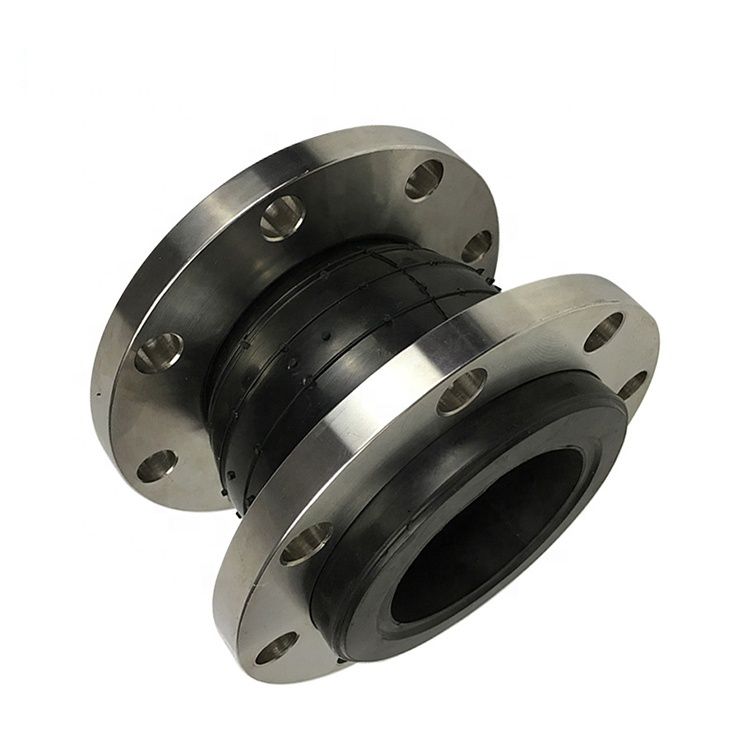
A Single Sphere Rubber Expansion Joint is a compact flanged flexible connector used to accommodate limited pipeline movement and reduce vibration and noise transmission. Its reinforced rubber body forms one spherical arch between two metal flanges, allowing controlled flexibility without a fully rigid pipe connection.
LEEVOA PIPE supplies single sphere rubber expansion joints for pump connections, HVAC systems, water treatment facilities and compatible industrial piping. Available configurations include EPDM, NBR and other rubber compounds, with flange materials and drilling patterns selected to suit the operating conditions and project requirements.
Why Choose a Single Sphere Rubber Expansion Joint?
A single sphere design is a practical option where a relatively short installation length and a flexible flanged connection are required. The reinforced elastomeric body can help accommodate specified pipe movement while limiting the transfer of mechanical vibration between connected components.
- Compact construction: One rubber arch between two flanges suits many standard pump and pipeline connection arrangements.
- Vibration isolation: The flexible rubber element helps reduce vibration transmitted from pumps and rotating equipment into adjoining pipework.
- Noise reduction: Elastomeric construction helps interrupt structure-borne vibration and associated piping noise.
- Movement accommodation: The selected joint can accommodate axial compression, extension, lateral displacement or angular deflection within its approved limits.
- Material flexibility: Different rubber compounds and flange materials can be specified according to the working medium and operating environment.
- Flanged installation: Available drilling patterns help match common piping connection requirements.
Single Sphere Rubber Expansion Joint Construction
A typical single sphere flexible rubber joint consists of a reinforced elastomer body and two metal flanges. The rubber body forms one flexible arch, while the end connections provide the required mechanical interface with the adjoining pipe flanges.
Main Components
- Inner rubber liner: Provides the surface in contact with the conveyed medium. Its compound must be selected for the actual chemical and temperature conditions.
- Reinforcing cord layers: Synthetic textile reinforcement supports the rubber body under the specified operating conditions.
- Outer rubber cover: Protects the reinforcement from external exposure within the compound’s environmental limitations.
- Reinforced end beads: Help retain the rubber connection ends. Steel-wire reinforcement may be incorporated depending on the design.
- Metal flanges: Connect the joint to the pipeline. Loose or rotatable flange arrangements may be supplied where the selected construction allows.
The number and arrangement of reinforcing layers, end rings and flange components depend on the approved joint design. These details should be checked against the manufacturer’s drawing rather than assumed from a general product photograph.
Technical Specifications
| Specification | Available Configuration / Description |
|---|---|
| Product Name | Single Sphere Rubber Expansion Joint |
| Alternative Names | Single Arch Rubber Expansion Joint; Single Sphere Flexible Rubber Joint; Flanged Rubber Connector |
| Body Configuration | One reinforced rubber arch / sphere |
| Connection | Flanged, with two metal flanges |
| Reference Size Coverage | DN32–DN600 in the dimension table below; additional sizes subject to confirmation |
| Rubber Material Options | EPDM, NBR, NR, CR / Neoprene; other compounds by application review |
| Reinforcement | Synthetic cord fabric and design-dependent steel-wire reinforcement |
| Flange Material Options | Carbon steel, galvanized carbon steel, ductile iron, SS304, SS316 |
| Flange Drilling Options | EN / DIN PN10, PN16, PN25; ANSI / ASME Class 150; JIS and project-specific drilling, subject to confirmation |
| Pressure Selection | PN10 / PN16 / PN25 configurations commonly requested; actual joint pressure rating depends on size, material, temperature and design |
| Movement Types | Axial compression, axial extension, lateral movement and angular deflection within approved limits |
| Operating Temperature | Depends on rubber compound, working medium, pressure and construction |
| Vacuum Service | Requires confirmation of negative-pressure capability and any necessary vacuum support |
| Control / Limit Rods | Available for suitable configurations following installation and restraint review |
| Custom Requirements | Flange drilling, flange material, rubber compound and selected face-to-face dimensions |
Technical note: A PN16 flange drilling designation does not, by itself, establish a 16 bar allowable working pressure for the complete rubber expansion joint. Confirm the joint pressure rating at the actual operating temperature, together with movement limits and the approved drawing, before ordering.
Single Sphere Rubber Expansion Joint Dimensions
The following table provides reference face-to-face installation lengths for common single sphere rubber expansion joint sizes. These are nominal reference dimensions rather than a universal dimensional standard.
| Nominal Diameter (DN) | Nominal Size (inch) | Reference Face-to-Face Length L (mm) |
|---|---|---|
| DN32 | 1 1/4 | 95 |
| DN40 | 1 1/2 | 95 |
| DN50 | 2 | 105 |
| DN65 | 2 1/2 | 115 |
| DN80 | 3 | 135 |
| DN100 | 4 | 150 |
| DN125 | 5 | 165 |
| DN150 | 6 | 180 |
| DN200 | 8 | 210 |
| DN250 | 10 | 230 |
| DN300 | 12 | 245 |
| DN350 | 14 | 255 |
| DN400 | 16 | 255 |
| DN450 | 18 | 255 |
| DN500 | 20 | 255 |
| DN600 | 24 | 260 |
Dimension note: Final face-to-face length, flange outside diameter, bolt-hole quantity, bolt-circle diameter and flange thickness must be confirmed for the selected configuration. Alternative lengths may be available. Do not use this reference table as a substitute for an approved installation drawing.
Rubber Material Options: EPDM, NBR, NR and Neoprene
The correct rubber compound depends primarily on the medium, temperature and service environment. A single sphere rubber joint intended for water service should not automatically be treated as suitable for oil, aggressive chemicals or high-temperature processes.
| Rubber Compound | Typical Selection Considerations |
|---|---|
| EPDM | Commonly considered for compatible water, hot-water and HVAC services. Generally unsuitable for petroleum oils and many hydrocarbon fluids. |
| NBR / Nitrile | Considered where resistance to compatible oils, fuels or hydrocarbon-containing media is required. |
| NR / Natural Rubber | Available for selected general-service applications where its flexibility and medium compatibility are suitable. |
| CR / Neoprene | Considered for selected water, atmospheric exposure and moderate oil-resistance requirements, subject to compatibility review. |
Rubber selection must account for concentration, continuous operating temperature, pressure and service duration. Where chemical compatibility, drinking-water approvals or special service conditions are involved, the applicable material specifications and required certifications must be verified separately.
What Movements Can a Single Sphere Rubber Joint Accommodate?
A flanged single sphere rubber expansion joint can be specified for several types of movement. The allowable displacement depends on the actual size, construction, pressure, temperature and the combination of movements occurring in service.
- Axial compression: The joint shortens along the pipe centerline.
- Axial extension: The joint lengthens along the pipe centerline within its permitted extension limit.
- Lateral movement: The connected ends move sideways relative to one another within the approved displacement range.
- Angular deflection: The centerlines of the connected pipe ends change angle within the joint’s allowable angular limit.
Published maximum values for one movement direction should not be assumed to apply simultaneously to other movement directions. Combined movement requires a configuration-specific check. Torsional twisting is not an intended operating movement for a standard single sphere rubber joint.
Typical Applications of Single Sphere Rubber Expansion Joints
Pump Suction and Discharge Connections
Single sphere rubber expansion joints are often considered near pumps to help limit vibration transfer into connected piping. The joint should be installed in a properly supported system, with pressure thrust, pump nozzle loading and any suction-side vacuum conditions reviewed before selection.
Explore Pump & Mechanical Connections for related piping requirements.
HVAC and Building Services
In compatible chilled-water, heating-water and mechanical piping systems, a flexible rubber connector can help accommodate limited movement and reduce the transmission of equipment vibration. EPDM is a common material candidate when the fluid and operating temperature are suitable.
Water and Wastewater Treatment
Flanged rubber expansion joints may be used around pumping equipment, treatment facilities and utility piping. Material compatibility, corrosion exposure and any water-quality approval requirements should be reviewed for each project.
See Water & Wastewater Systems for related applications.
Industrial Utility Piping
Industrial utility lines can require flexible connections where machinery vibration or predictable pipeline movement needs to be managed. Rubber compounds, flange materials and restraint arrangements must be selected according to the particular service rather than the general description of an industrial pipeline.
See Industrial Piping Systems for additional application considerations.
Installation and Control Rod Considerations
Proper installation is important for the performance of a single sphere rubber expansion joint. A flexible joint should not be used to compensate for an unsupported pipeline, excessive assembly misalignment or an unrestrained pressure-thrust condition.
Check the Pipe Supports and Anchors
Confirm that the piping system has suitable anchors, guides and supports for the joint location. Internal pressure can generate substantial axial thrust forces. The joint itself must not be treated as a substitute for structural restraint.
Confirm Flange Alignment Before Tightening
Check that the mating flanges are correctly aligned and that the installed face-to-face distance matches the approved drawing. Do not force the rubber joint into position by pulling misaligned piping together or by excessive compression.
When Are Control or Limit Rods Needed?
Control rods or limit rods may be required where a designed restraint arrangement is necessary to restrict excessive extension or manage pressure-related movement. Their sizing, setting and load capacity must be engineered for the actual piping system. They do not automatically eliminate the need for anchors and supports.
Check Vacuum and Movement Limits
For pump suction lines or other negative-pressure applications, confirm the joint’s vacuum rating and whether an internal support ring or another suitable design is needed. Avoid torsional loading and do not exceed the manufacturer’s approved movement limits.
For more information on the overall connection strategy, visit Pipe Vibration & Movement Control.
Single Sphere vs Double Sphere Rubber Expansion Joint
Both designs provide a flexible flanged connection, but the number of rubber arches changes the geometry and available movement characteristics.
| Feature | Single Sphere | Double Sphere |
|---|---|---|
| Rubber Arches | One | Two |
| Typical Construction | More compact | Generally longer |
| Movement Capability | Depends on selected model and size | Often greater in comparable designs; verify actual ratings |
| Typical Selection | General pump, HVAC and water piping connections | Applications requiring a different movement capacity or joint geometry |
| Engineering Check | Movement, pressure, restraint and installation length | Movement, pressure, restraint and installation length |
A double sphere design is not automatically the better choice. Compare the approved movement data, available installation space, pressure rating and restraint conditions before deciding.
For other configurations, explore the Rubber Expansion Joint product range.
How to Specify a Single Sphere Rubber Expansion Joint
To obtain a suitable quotation, provide the following information where available:
- Nominal pipe size: DN or NPS.
- Working medium: Water, wastewater, air, oil or another specified fluid.
- Operating temperature: Normal and maximum expected temperatures.
- Operating pressure: Normal pressure, surge conditions and any vacuum requirements.
- Flange specification: Required drilling standard, pressure class and flange material.
- Installation length: Required face-to-face dimension.
- Movement and restraint: Expected displacement, pipe supports, anchors and control-rod requirements.
- Order details: Quantity, destination, drawings and any required project documentation.
If the required rubber compound or movement allowance is not known, share the operating medium, temperature, pressure and piping arrangement. These details can be reviewed before finalizing the product configuration.
Frequently Asked Questions
What is a single sphere rubber expansion joint used for?
It provides a flexible flanged connection that can accommodate limited pipeline movement while helping reduce vibration and noise transmission in compatible piping systems.
Is EPDM suitable for a single sphere rubber expansion joint?
EPDM is commonly considered for compatible water, hot-water and HVAC applications. It should not be selected for petroleum oil service without a separate compatibility review.
Does PN16 mean the rubber expansion joint can always operate at 16 bar?
No. PN16 may identify the flange drilling or nominal pressure designation. The allowable working pressure of the complete joint depends on its approved design, size, rubber material and operating temperature.
Can a single sphere rubber expansion joint be used on a pump suction line?
Yes, when the selected design is suitable for the actual suction pressure or vacuum conditions and the piping is correctly supported. Vacuum resistance and any required support components must be confirmed.
Are control rods required for every single sphere rubber expansion joint?
No. Their use depends on the piping restraint arrangement, pressure thrust, equipment loads and specified movement limits. The installation should be reviewed before deciding whether control rods are needed.
Can the face-to-face length and flange material be customized?
Selected configurations can be reviewed for alternative installation lengths, flange materials and drilling patterns. Availability and final dimensions must be confirmed against the project requirement.
Request a Quote for Single Sphere Rubber Expansion Joints
LEEVOA PIPE can review your single sphere rubber expansion joint requirements based on nominal size, working medium, pressure, temperature, flange standard and installation conditions.
Send your technical specification or existing joint drawing for configuration review and quotation.
Request a Quote: Submit Your Piping Requirements
Email: sales@leevoapipe.com
WhatsApp: +86 156 3813 8723