PRODUCT MODEL
Ductile Iron Dismantling Joint
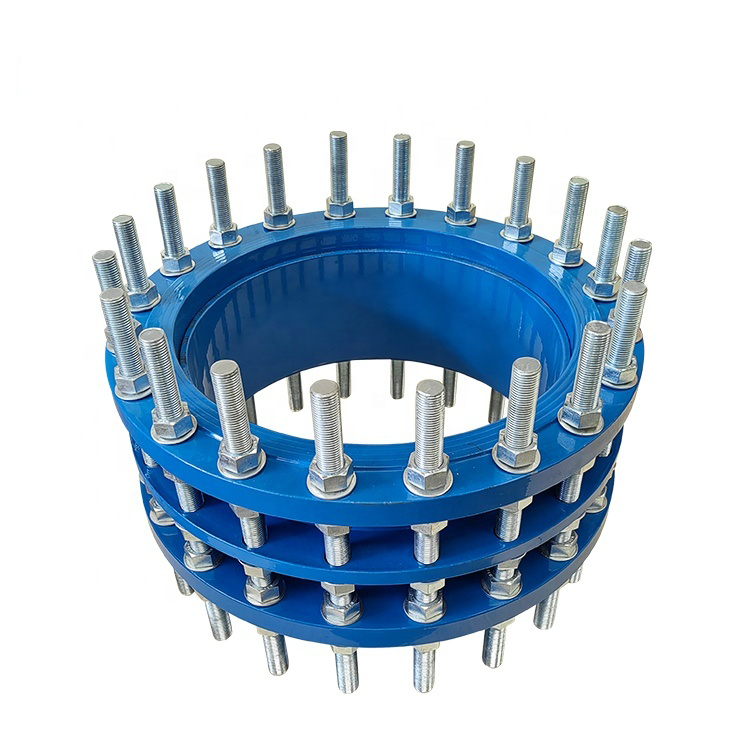
A ductile iron dismantling joint is a double-flanged, length-adjustable pipe fitting used to connect valves, pumps, meters and other flanged equipment to a pipeline. Its telescopic construction allows the installation length to be adjusted within a specified range, making equipment installation and future removal easier.
Commonly used in water distribution networks, wastewater treatment facilities and municipal pipeline projects, this type of joint combines ductile iron body components, a compression sealing system and longitudinal tie rods.
LEEVOA PIPE supplies ductile iron dismantling joint configurations according to project requirements, including flange drilling, installation length, sealing materials and protective coatings. Final dimensions and pressure suitability are confirmed against the selected design.
Ductile Iron Dismantling Joint Specifications
| Specification | Available Options / Description |
|---|---|
| Product | Ductile Iron Dismantling Joint |
| Connection Type | Double-flanged, telescopic connection |
| Main Body Material | Ductile iron; individual component materials depend on the design |
| Pressure Class | Common PN10 / PN16 configurations; subject to size and design confirmation |
| Nominal Size | Project-dependent; confirm available DN range |
| Flange Standard | EN 1092-2 and project-specific flange drilling, subject to confirmation |
| Sealing Ring | EPDM; alternative elastomers such as NBR subject to application |
| Surface Protection | Epoxy coating or other specified protective finish |
| Tie Rods / Fasteners | Coated carbon steel or stainless steel options, depending on configuration |
| Installation Length | Adjustable within the approved drawing limits |
| Typical Applications | Water supply, wastewater treatment, pump stations and valve installations |
| Customization | Flange drilling, dimensions, coating and fastener specifications |
Technical note: PN10 and PN16 are commonly specified configurations, not a universal rating for every size. The approved technical drawing determines the applicable dimensions, adjustment range and component materials.
Why Choose Ductile Iron for a Dismantling Joint?
Ductile iron is widely used in waterworks fittings because it offers a useful combination of mechanical strength and casting flexibility. It allows flange bodies and retaining components to be produced in shapes suited to water distribution and infrastructure piping.
For a dismantling joint installed beside a gate valve or butterfly valve, the main requirement is a secure, adjustable connection that can be assembled and dismantled without unnecessarily disturbing the surrounding pipework.
A ductile iron body can meet this requirement when the joint has been correctly selected for its pressure, flange interface and service conditions.
Corrosion protection still matters. Ductile iron is not inherently immune to corrosion, so the coating should be specified according to the water quality, installation environment and project requirements. Epoxy-coated configurations are commonly used for waterworks applications.
Ductile Iron Dismantling Joint Construction
A typical ductile iron dismantling joint consists of several interacting components:
- Flanged body: Provides the main connection to the adjoining pipeline or equipment. The principal cast components may be made from ductile iron.
- Telescopic spigot or short pipe: Slides within the joint to provide the permitted axial installation adjustment.
- Gland or retaining flange: Compresses the sealing ring around the telescopic section.
- Elastomer sealing ring: Creates the seal between the overlapping components. EPDM is commonly selected for compatible water applications.
- Tie rods, nuts and washers: Restrain the assembly after adjustment and transfer axial loads according to the approved joint and pipeline design.
Individual components are not necessarily made from the same material. For example, a ductile iron joint may incorporate steel or stainless steel tie rods. The exact bill of materials should be confirmed before ordering.
PN10 vs PN16 Ductile Iron Dismantling Joints
PN10 and PN16 are common pressure-class designations for flanged water pipeline components. The correct selection depends on the pipeline’s design pressure, operating conditions and mating flange requirements.
PN10 dismantling joints are typically considered for systems specified with PN10 connections, provided that the selected joint is suitable for the actual operating and test conditions.
PN16 dismantling joints are selected for systems requiring a PN16-rated connection, again subject to the joint’s approved design and pressure limitations.
The PN designation alone is not enough to confirm compatibility. Two flanges with the same DN may have different drilling patterns when their pressure classes differ.
For ductile iron flange connections, EN 1092-2 is a commonly referenced dimensional standard. Other flange drilling requirements can be reviewed against project drawings.
Before ordering, confirm:
- Nominal pipe size (DN).
- Required pressure class.
- Mating flange dimensions and bolt-hole arrangement.
- Operating and test pressures.
- Working medium and temperature.
Do not assume that PN10 and PN16 flanges are interchangeable without checking the relevant dimensions.
How Much Installation Adjustment Is Available?
A dismantling joint provides axial adjustment through its telescopic section. This helps compensate for dimensional differences between fixed flanged connections during installation.
However, the adjustment range is not unlimited.
The available minimum and maximum face-to-face lengths depend on the specific design. A joint must be selected so that the required installation length falls within its approved adjustment range while maintaining adequate sealing engagement.
If the joint is intended to simplify future valve removal, the maintenance procedure and available dismantling clearance should also be checked at the design stage.
Once installed and restrained, a conventional dismantling joint is not intended to function as a continuously moving expansion joint.
For applications requiring operational flexibility or vibration isolation, see our Rubber Expansion Joint range.
Typical Applications
Water Transmission and Distribution
Ductile iron dismantling joints can be installed near flanged valves and other fittings in compatible water transmission and distribution systems. They provide an adjustable connection point during construction and help plan future equipment removal.
Water and Wastewater Treatment Plants
Treatment facilities contain numerous valves, meters and mechanical connections that may require inspection or replacement. Dismantling joints provide installation adjustment and maintenance access where the specified materials are compatible with the medium.
Pump Stations
A dismantling joint can simplify the installation and removal of suitable flanged components near pumping equipment. Pipe supports, alignment and mechanical loads must still be addressed in the overall piping design.
Butterfly Valve and Gate Valve Connections
Large flanged valves can be difficult to remove when installed between fixed pipe sections. A properly selected dismantling joint provides adjustable installation length and can help create the clearance required for planned maintenance.
For additional system information, visit our Valve & Pipeline Maintenance page.
Installation and Maintenance Considerations
Correct installation is essential for sealing performance and mechanical restraint.
-
Check the approved drawing.
Confirm the DN, pressure class, flange drilling, face-to-face length and permitted adjustment range. -
Inspect and align the connections.
Ensure the mating flanges are aligned and adequately supported. Do not use the joint to force severely misaligned pipework into position. -
Set the installation length.
Position the telescopic section within its permitted adjustment range and maintain the required sealing engagement. -
Compress the sealing ring evenly.
Tighten gland fasteners progressively using the sequence and torque values specified for the selected product. -
Secure the tie rods and verify the connection.
Install and tighten the restraining fasteners as required by the approved design, then inspect and test the completed assembly according to the project procedure.
Before dismantling equipment for maintenance, isolate and fully depressurize the relevant pipeline section. Confirm that the pipework and connected equipment remain adequately supported.
Important: A dismantling joint should not be treated as a substitute for properly designed pipe anchors, supports or thermal movement compensation.
Ductile Iron vs Carbon Steel vs Stainless Steel
Dismantling joints made from these three materials can have very similar external configurations. The best choice depends on the project specification rather than appearance alone.
Ductile iron is a common choice for cast fittings in water supply and municipal infrastructure systems.
Carbon steel is often selected for fabricated designs, large dimensions or project-specific construction requirements.
Stainless steel may be specified where the operating environment, corrosion exposure or project material requirements justify stainless construction.
A protective coating can make different base materials look similar. Material identification should therefore be based on technical drawings, material documentation or other verified information—not paint color.
Explore the other material options through our Dismantling Joint product range.
What Information Is Needed Before Ordering?
For accurate product selection and quotation, please provide:
- Nominal size: DN or NPS.
- Pressure requirement: PN class, operating pressure and any applicable test pressure.
- Flange standard: EN 1092-2, ANSI / ASME, AS or the actual mating flange drawing.
- Required installation length: Nominal face-to-face dimension and any specified adjustment range.
- Working medium: Potable water, process water, wastewater or another fluid.
- Operating temperature: Normal and maximum expected temperatures.
- Sealing and coating requirements: Including any drinking-water-contact approvals required by the project.
- Fastener requirements: Carbon steel, stainless steel or another specified grade.
- Quantity and destination: Required number of units and delivery location.
Providing a valve drawing or existing flange dimensions can help prevent incorrect drilling or installation-length selection.
Frequently Asked Questions
Is a ductile iron dismantling joint suitable for potable water?
It can be specified for potable-water systems when the selected coating, elastomer and other wetted materials meet the applicable drinking-water-contact requirements. Any required approvals must be verified for the exact product configuration.
What is the difference between PN10 and PN16 dismantling joints?
They are different pressure-class configurations. The correct selection depends on the specified pressure rating and mating flange dimensions. Their bolt-hole arrangements are not necessarily interchangeable.
Can a ductile iron dismantling joint be installed next to a butterfly valve?
Yes. It is commonly used beside flanged butterfly valves and gate valves to provide installation adjustment and planned removal clearance, provided the connection dimensions and system design are suitable.
Is every component made from ductile iron?
No. Main cast components may be ductile iron, while tie rods, nuts, washers and some other parts may be carbon steel or stainless steel depending on the design.
Can a dismantling joint absorb thermal expansion during operation?
A conventional restrained dismantling joint is primarily intended for installation and removal adjustment, not continuous thermal movement or vibration absorption.
Are EPDM and stainless steel tie rods available?
EPDM seals and stainless steel tie-rod options are commonly used in this product category. Their availability, grades and compatibility should be confirmed for the selected LEEVOA configuration.
Can the installation length be customized?
Project-specific face-to-face dimensions can be reviewed. The achievable adjustment range and final dimensions depend on the selected design and must be confirmed by the approved drawing.
Request a Ductile Iron Dismantling Joint Quotation
Need a PN10 or PN16 ductile iron dismantling joint for a water pipeline, pump station or valve installation?
LEEVOA PIPE can review your required size, flange connection, installation length, sealing material and coating specification to identify a suitable configuration.
Send us your technical requirements or drawings for review before quotation.
Email: sales@leevoapipe.com
WhatsApp: +86 156 3813 8723