PRODUCT MODEL
Double Plate Pipe Repair Clamp
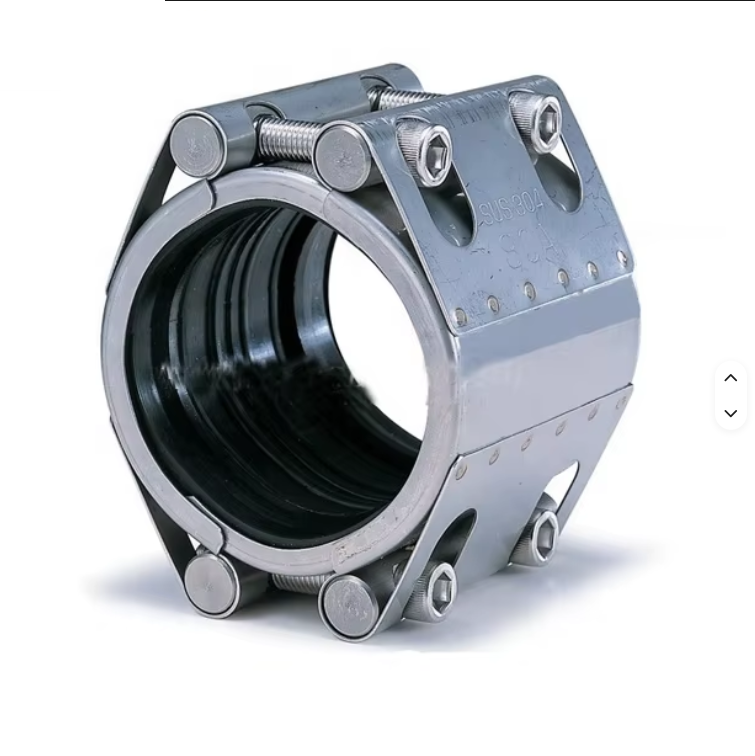
LEEVOA PIPE supplies double plate pipe repair clamps for localized pipeline leak repair and maintenance. Each clamp uses two separate curved stainless steel shell sections, bolted together on opposite sides of the pipe, with an internal rubber sealing gasket.
This two-piece construction allows the clamp to be assembled around an existing pipeline without welding or removing the pipe section. It is particularly useful when a split-shell arrangement is preferred for larger pipe diameters, installation access or specific repair requirements.
The double plate design is different from our double band pipe repair clamp, which uses one continuous stainless steel shell with fastening assemblies on both sides.
How Does a Double Plate Pipe Repair Clamp Work?
A double plate pipe repair clamp works by compressing a rubber gasket against the outside surface of a damaged pipe.
Two curved stainless steel plates are positioned around the pipe and connected by bolted fastening assemblies on opposite sides. As the fasteners are tightened to the specified torque, the shell sections apply radial compression to the sealing gasket.
When properly selected and installed, the compressed gasket can seal suitable pinholes, localized cracks and other limited areas of leakage.
The clamp must cover the entire damaged area with sufficient sealing margin. Its suitability depends on pipe condition, outside diameter, defect dimensions, operating pressure, temperature and the fluid being carried.
Key Features
- Two-piece stainless steel construction: Two separate curved shell sections allow the clamp to be assembled around existing pipework.
- Bolted fastening on both sides: Opposing fastening assemblies secure the shell sections and apply compression to the gasket.
- Mechanical, no-welding installation: No welding of the clamp to the existing pipeline is required.
- Corrosion-resistant material options: SS304 and SS316 shells are available for different service environments.
- Flexible sealing material selection: EPDM and NBR gasket options can be selected according to the operating medium and temperature.
- Project-specific dimensions: Pipe diameter range, clamp length and hardware configuration can be reviewed against project requirements.
Technical Specifications and Ordering Options
| Parameter | Available Configuration / Selection Requirement |
|---|---|
| Product Type | Double Plate Pipe Repair Clamp |
| Construction | Two separate curved stainless steel shell sections |
| Shell Material | Stainless Steel 304 / 316 |
| Sealing Gasket | EPDM / NBR; alternative compounds on request |
| Fastening Arrangement | Bolted fastening assemblies on both sides |
| Pipe Diameter | Selected according to measured pipe OD |
| Clamp Length | Selected according to defect dimensions and sealing coverage |
| Working Pressure | Confirmed for the specific size and application |
| Operating Temperature | Depends on the selected gasket and service conditions |
| Pipe Materials | Steel, cast iron, ductile iron and compatible plastic or composite pipes, subject to review |
| Typical Service | Water supply, wastewater and compatible industrial pipelines |
| Installation | Mechanical bolted repair; no welding required |
| Customization | Diameter range, length, material and gasket options |
| Documentation | Technical dimensions and drawings for order confirmation |
Important: Working pressure, installation torque, temperature limits and permitted repair dimensions must be checked against the approved specification for the selected model. Ratings for other pipe repair clamp types must not be applied automatically to this double plate configuration.
Materials and Construction
Two-Piece Stainless Steel Shell
The clamp body consists of two independent curved stainless steel plates that fit around the pipe circumference.
SS304 is a practical choice for many general pipeline environments. SS316 can be considered where greater resistance to certain corrosive conditions is required. Final material selection should reflect the actual service environment.
EPDM and NBR Rubber Gaskets
The internal rubber gasket provides the sealing surface between the clamp and the pipe.
EPDM is commonly selected for compatible water and wastewater applications. NBR is generally considered for certain oils and hydrocarbon-related services.
Gasket compatibility must be checked for the actual medium, temperature and operating conditions. Applications involving drinking water, gas or hazardous fluids may require additional approvals or project-specific verification.
Opposing Bolted Fastening Assemblies
Bolted fastening assemblies connect the two shell sections on both sides of the pipe.
Correct alignment and controlled tightening are important for distributing gasket compression. Fastener materials, bolt quantities and tightening torque depend on the specific clamp design.
Typical Applications
- Municipal water supply: Repair of suitable localized leaks in water distribution or transmission pipelines.
- Wastewater systems: Maintenance of damaged pipe sections where the gasket is compatible with the conveyed medium.
- Industrial pipelines: Localized repairs in compatible process-water and utility systems.
- Larger-diameter pipe maintenance: Situations where a two-piece clamp arrangement provides a practical installation configuration.
Explore our Emergency Pipe Repair solutions and Water & Wastewater applications for related selection considerations.
Double Plate vs Double Band Pipe Repair Clamp
Although the names sound similar, these configurations are not the same.
| Configuration | Shell Construction | Fastening Arrangement |
|---|---|---|
| Single Band | One continuous stainless steel shell | Bolted closure on one side |
| Double Band | One continuous stainless steel shell | Bolted fastening assemblies on both sides |
| Double Plate | Two separate curved stainless steel shell sections | Bolted connections joining the shell sections on both sides |
The double plate version is worth considering when a two-piece shell is required for the pipe size, assembly method or installation access.
The best option is not determined by the product name alone. Pipe OD, damage size, pressure rating and installation conditions must all be considered.
See our complete Pipe Repair Clamp range for other configurations.
How to Select the Right Double Plate Repair Clamp
- Measure the actual pipe OD. Do not rely on nominal DN alone. Different pipe materials and standards can have different outside diameters.
- Identify the pipe material and condition. Confirm whether the pipe is steel, ductile iron, cast iron, PVC, PE, GRP or another material. Check for severe corrosion, deformation or loss of wall strength.
- Measure the defect. Provide the axial length and approximate width of the crack, hole or corroded area so the required sealing coverage can be determined.
- Confirm the operating conditions. State working pressure, temperature and medium, including any relevant pressure fluctuations.
- Review the installation space and quantity. Allow sufficient access around both sides of the pipe for assembly and tightening. Include the required quantity and delivery destination.
For severely deteriorated pipes, extensive fractures or applications requiring structural or axial restraint, a repair clamp alone may not be an appropriate solution.
Installation Overview
- Assess the pipeline condition and follow the site’s isolation, depressurization and safety procedures.
- Clean the pipe surface and remove loose material that could interfere with gasket contact.
- Position the two shell sections and gasket around the damaged area, allowing sufficient sealing coverage.
- Align the opposing fastening assemblies and tighten the bolts progressively in the sequence and torque specified for the selected model.
- Inspect the installed assembly and carry out the required leakage or pressure checks before returning the line to service.
Installation on an operating, pressurized pipeline must only be considered when the specific clamp is approved for the procedure and the work is carried out by qualified personnel under an appropriate safety plan.
Frequently Asked Questions
What is a double plate pipe repair clamp?
It is a mechanical pipe repair device made from two separate curved stainless steel plates, bolted together around an existing pipe to compress an internal sealing gasket.
Is a double plate clamp the same as a double band clamp?
No. In the LEEVOA PIPE product range, the double plate design has two independent shell sections. The double band design uses one continuous shell with fastening assemblies on both sides.
Can a double plate repair clamp be used on plastic pipes?
Certain configurations may be suitable for PVC, PE or other plastic pipes. Compatibility depends on pipe OD, wall strength, deformation, operating pressure and the manufacturer’s approved installation requirements.
Can it repair a pipe without welding?
Yes. The clamp is installed mechanically using bolted fastening assemblies. No welding to the existing pipe is required.
Can it stop a leak while the pipeline is under pressure?
Some repair clamp designs support under-pressure installation, but this must not be assumed for every double plate model. The applicable pressure rating, defect condition and approved installation procedure must be confirmed beforehand.
Can LEEVOA PIPE supply custom sizes?
Custom pipe diameter ranges, clamp lengths and material options can be reviewed according to project requirements. Please provide the actual pipe OD, defect dimensions and operating conditions for selection.
Request a Double Plate Pipe Repair Clamp Quote
Need a double plate stainless steel repair clamp for an existing pipeline?
Send LEEVOA PIPE your pipe outside diameter, pipe material, damaged-area dimensions, working pressure, medium, temperature, required quantity and delivery destination.
Photos or technical drawings of the pipe and damaged area are also helpful. We can review the details, confirm a suitable configuration and prepare a quotation.